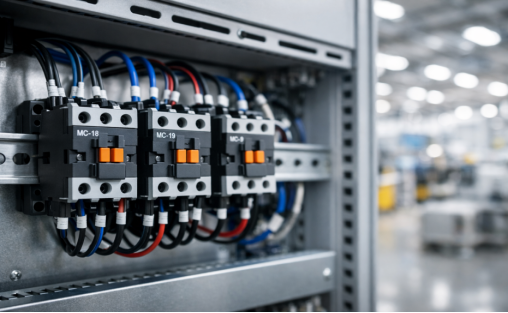
Motor contactors are the silent guardians of industrial power systems. These electromechanical switches safely control high-voltage motor circuits, acting as precision gatekeepers between energy sources and heavy machinery. When a coil de-energizes, their normally open contacts instantly disconnect power—a fail-safe mechanism preventing electrical fires and equipment damage. From factory assembly lines to commercial HVAC systems, motor contactors enable arc suppression and remote motor control with military-grade reliability. But how do these unsung heroes balance raw power with operational safety? Let’s demystify their role in modern automation.
Key Components of Motor Contactors
Electromagnetic Coil
The electromagnetic coil is the motor contactor’s activation powerhouse. When energized, it generates a magnetic field strong enough to pull the contacts closed—think of it as the “on” switch for high-voltage circuits. De-energize the coil, and the contacts snap open instantly, cutting power to prevent overloads. This precision ensures seamless integration with automation systems.
Contacts
Contacts are where the real work happens.
- Power Contacts : These heavy-duty conductors handle the main current flow to the motor, rated for thousands of amps without faltering.
- Auxiliary Contacts : Silent operators in control circuits, they trigger alarms, signals, or secondary systems while the motor runs.
- Contact Springs : Often overlooked, these springs maintain tension to prevent contact welding and ensure crisp mechanical action during rapid cycling.
Frame
The frame isn’t just a shell—it’s a fortress. Made from polycarbonate or thermosetting plastics, it insulates live components and shields against dust, moisture, and explosive environments. Open-frame designs often pair with secondary enclosures for harsh industrial settings.
Hidden hero? The arc extinguishing device . It quenches dangerous sparks when contacts separate, protecting both the motor contactor and downstream equipment. Together, these components create a symphony of safety and reliability for demanding applications.
Types of Motor Contactors
Definite-Purpose Contactors
Built for HVAC systems, these handle low-duty-cycle single- or three-phase loads with surgical precision. Their streamlined design minimizes energy waste during frequent starts/stops.
Safety Contactors
Mechanically linked poles guarantee simultaneous closure. If power fails, contacts snap open instantly—a fail-safe lifesaver in critical industrial environments.
Non-Reversing (FLNR) Contactors
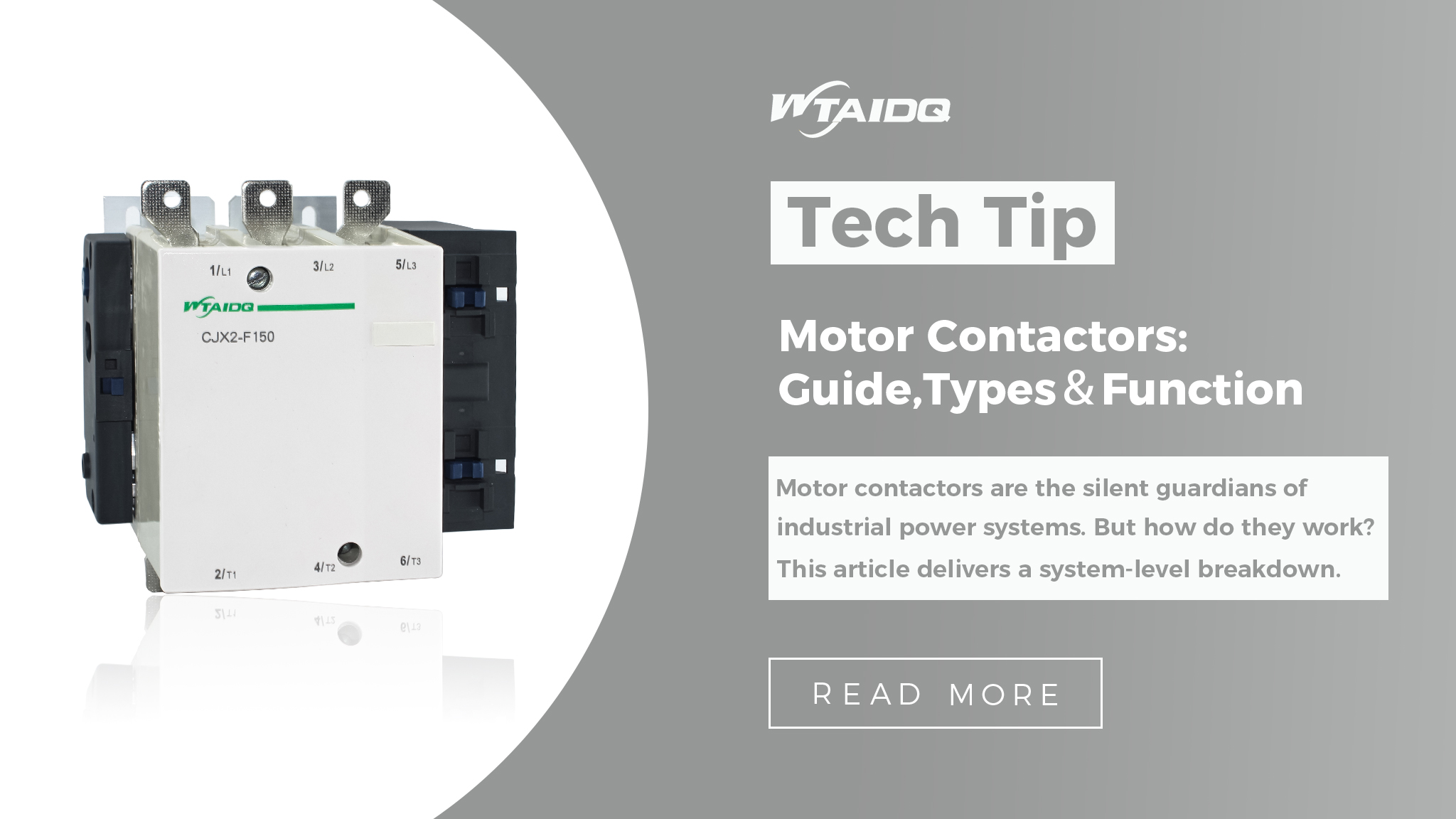
The wtaiele CJX2-F Series (115A–1,000A IEC Standard) shines here. This workhorse simplifies single- or three-phase motor control without directional complexity.
Reversing (FLR) Contactors
Need bidirectional control? The wtaiele CJX2-K Series (6–16A) uses interlocked assemblies to prevent opposing contactor activation. Ideal for conveyor systems or winches requiring precise directional shifts.
Each type solves unique challenges. Match your application’s voltage, duty cycle, and safety needs to maximize your motor contactor’s lifespan.
Contactor vs Motor Starter: Critical Differences
Contactor
A motor contactor acts as your system’s on/off switch for high-power circuits. Its three core components work in tandem: the electromagnetic coil (activates via voltage), power contacts (conduct up to thousands of amps), and an arc extinguishing device (prevents dangerous sparks). Simple? Yes. But here’s the limitation: motor contactors can’t stop short-circuit currents. They’re specialists in controlled switching—not emergency shutdowns.
Motor Starter
Think of starters as motor contactors with superpowers. They integrate three layers:
- A motor contactor for basic switching
- Overload relays to detect overheating
- Circuit protection against surges This trio enables safe motor starts, continuous monitoring, and remote operation in harsh environments like mining or HVAC systems.
Key Insight : Use motor contactors for straightforward power control. For motors facing erratic loads or needing fail-safes, starters are mandatory. They don’t replace contactors—they enhance them.
Advanced Motor Contactors for High-Load Systemswtaiele’s high-load models handle up to 1,000A while lasting 100,000+ cycles—ideal for mining rigs or industrial presses. Their modular design lets you bolt on auxiliary contacts, surge suppressors, or mechanical interlocks like Lego blocks. Pro tip? Pair these motor contactors with starters for overload protection, but keep their roles distinct. Think of it as teamwork: contactors switch power, starters guard against disasters. Need rugged reliability? wtaiele engineers it into every arc-resistant frame.
Choosing the Right Contactorwtaiele shines: their modular designs let you mix customizable coils, time-delay relays, and explosion-proof enclosures like a tailored suit. Pro tip? Oversize your current rating by 20% for surge-heavy systems. Get this right, and your motor contactor becomes a decade-long workhorse.
Conclusionwtaiele CJX2-K/CJX2-F Series with certified starters. These combos deliver seamless directional control (CJX2-K) and high-current endurance (CJX2-F up to 1,000A) while keeping safety protocols locked in. Still unsure? Motor contactor selection isn’t a guessing game. wtaiele’s engineers specialize in crafting solutions for extreme loads, corrosive environments, or rapid-cycling demands. Send them your specs; they’ll return a battle-tested configuration. Because when motors drive your business, compromise isn’t an option.